

Outdoor furniture care: cleaning and winter storage
Outdoor furniture care depends on material, finish and storage conditions. Wood, coated metal, synthetic weave and cushions do not share one suitable cleaner. Start with the exact product’s instructions; this guide helps you choose a cleaning sequence and prepare for winter storage.
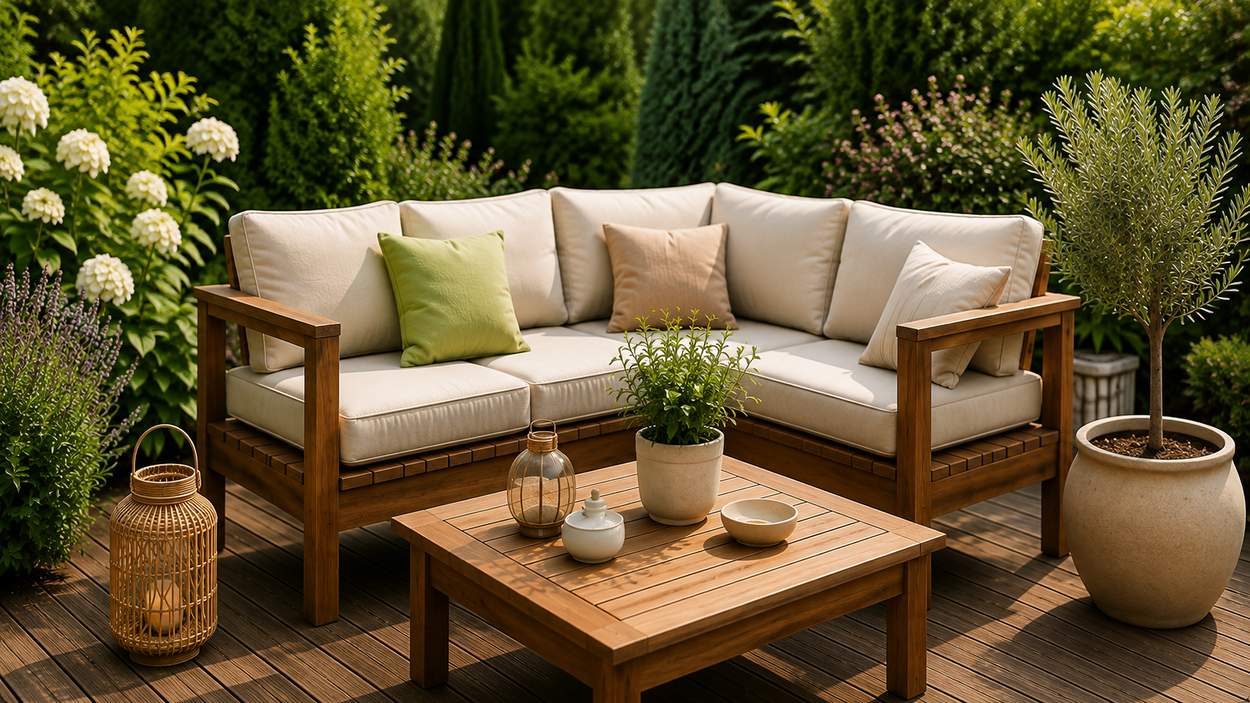
Cleaning outdoor furniture by material
| Material | First action | What to check in the instructions |
|---|---|---|
| Wood | Remove loose dirt and clean gently | Existing finish and compatible renewal product |
| Painted steel or aluminium | Soft cloth and permitted cleaner | Coating damage and repair method |
| Synthetic weave or plastic | Soft brush, including gaps | Cleaner and winter-condition compatibility |
| Natural rattan | Remove dust without soaking | Permitted moisture and outdoor use |
| Cushions and covers | Check the label and treat stains | Washing, drying and treatment conditions |
Inspect before cleaning
Identify the material and finish: wood-effect plastic is not timber, and synthetic weave is not natural rattan. Remove leaves and grit, then test the cleaner on a small hidden area. Do not use vinegar, chlorine, abrasives or pressure washing without confirmed compatibility.
Check joints, legs, hinges and surfaces. A cracked load-bearing part, sharp edge or unstable frame needs repair or replacement; cleaning does not restore safety. Maintain screws and moving components according to assembly instructions.
Wooden outdoor furniture care and oiling
Renewal depends on whether the furniture is oiled, painted, varnished or untreated. Oil is not automatically suitable for every finish. Teak colour changes may be natural, but inspect cracks and joints too: greying alone does not establish sound condition.
Use the recommended cleaner and finishing product. Dryness, sanding, temperature, coats and curing follow the product instructions rather than a universal interval. Oily rags can self-heat: do not leave them piled up or in an ordinary waste bin, and follow safe handling instructions.
Metal, plastic and woven surfaces
Clean coated metal with a compatible product and dry joints. Do not apply the same rust-removal recipe to steel and aluminium. Repair finishes with a compatible system; frame corrosion requires assessment rather than repainting alone.
Brush weave gaps gently and inspect the frame underneath. Cooking oil or heating is not a universal way to restore plastic. Do not soak natural rattan or leave it in exposed rain unless its manufacturer permits that use.
Cushions: care labels before a general washing temperature
Outdoor fabric is not automatically suitable for prolonged soaking. Wash removable covers only as labelled, checking the filling separately. Do not apply a universal vinegar mixture for mould or reproof after a fixed number of washes.
Treat stains according to the fabric instructions, dry thoroughly and check the interior before storage. Mould inside filling or a persistent smell may need more than surface cleaning; follow the manufacturer’s cleaning or replacement advice.
Winter storage: dry furniture and a suitable cover
Clean, dry, inspect and list repairs before storing. Keep cushions somewhere dry. Metal or PE weave does not guarantee outdoor winter suitability: check permitted conditions, including moisture, freezing and snow loads.
Measure the whole stored group’s width, depth and height. Example: a 180 cm-wide cover is too narrow for a 200 cm-wide group. Check shape, fastening and the intended air circulation too. Prevent water pooling and inspect moisture periodically; a cover does not make unsuitable furniture winter-resistant.
Checklist before storage
- Material and finish identified.
- Cleaner tested on a hidden area.
- Load-bearing parts and joints inspected.
- Cleaning and renewal follow instructions.
- Furniture and cushions dry before storage.
- Cover suits dimensions, shape and ventilation.
Frequently asked questions
How often should wooden furniture be oiled?
By finish condition, exposure and the product instructions. Timber species alone does not establish a universal annual or multi-year interval.
Can furniture stay outside under a cover all winter?
Only in conditions permitted by the manufacturer. A cover reduces direct exposure but does not remove condensation, freezing or snow loads.
Can I use a pressure washer?
It is not a universal method. Pressure can damage timber, weave, paint or joints; use only when explicitly permitted in the instructions.
Does restoring plastic colour fix cracks?
No. Cosmetic cleaning cannot rebuild a damaged load-bearing structure. Assess cracked products before use and replace where needed.