

Girls’ bedroom ideas: interests, colours and practical furniture
Plan a girl’s bedroom together with her: start with favourite activities, chosen colours and storage needs. Gender does not determine a palette or style. Combine practical furniture with replaceable details that can adapt to changing interests.
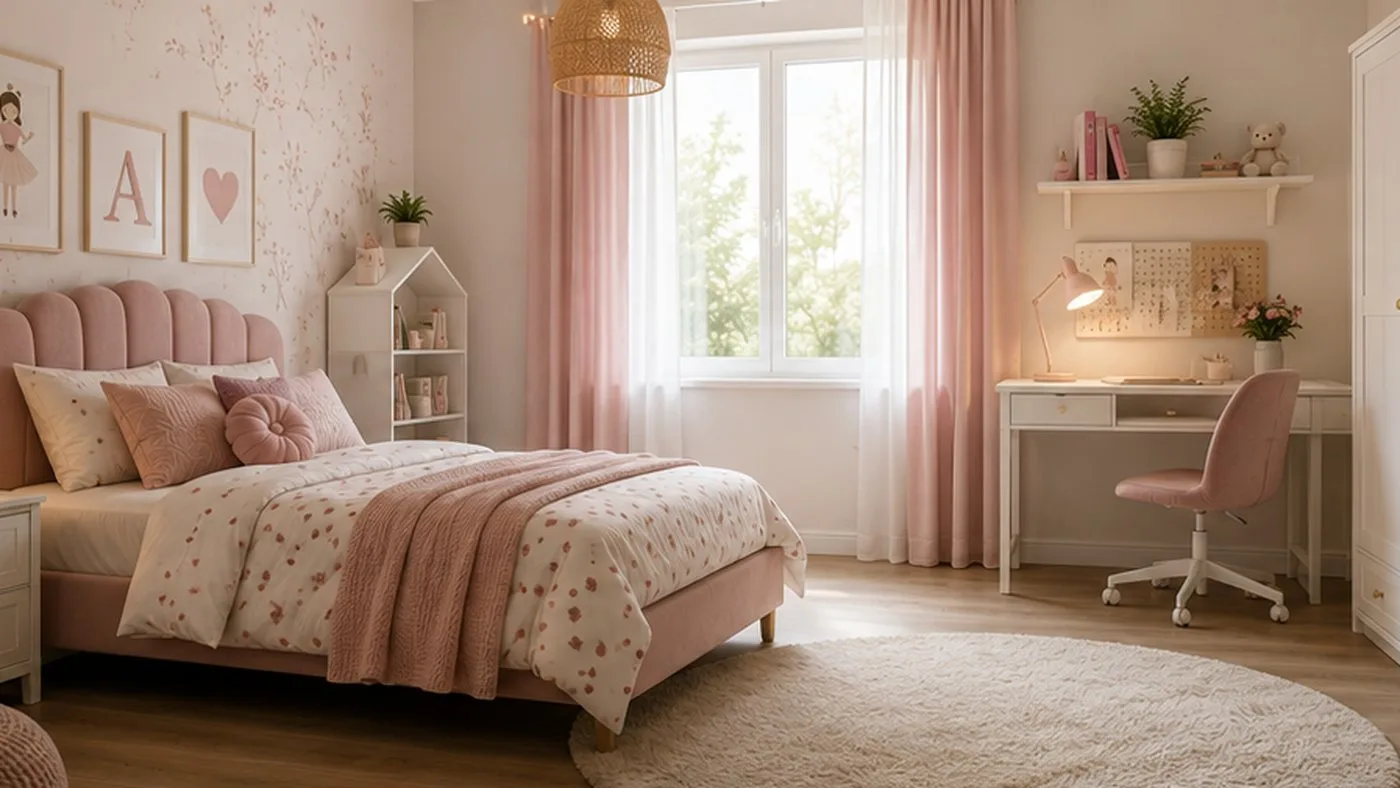
Colour ideas for a girl’s bedroom
| Palette | Use | What to check |
|---|---|---|
| Cream and muted green | Calm base with wood texture | Test the green in daylight and evening light. |
| Warm grey and terracotta | Neutral furniture with a colour accent | Keep the accent in textiles so it is easy to change. |
| Blue and light wood | Contrast with a lighter base | Match shades to the floor and existing furniture. |
| Pink with neutral tones | An optional colour, not a requirement | Discuss the choice; every wall need not be painted. |
Choose ideas around interests, not stereotypes
Ask her to select a few pictures and explain what she likes. Reading needs light and book storage; drawing needs a usable surface and supply storage; a collection needs a suitable shelf. A style name alone does not establish those needs.
Use replaceable posters, bedding or box labels for a theme. Choose large furniture by dimensions and function, so a changed interest does not require a whole new room.
Count albums, books, sports equipment and creative supplies before choosing boxes. A 20 cm bottle cannot stand upright in a drawer with 12 cm internal height. This is a measurement example: compare actual belongings with internal compartment dimensions.
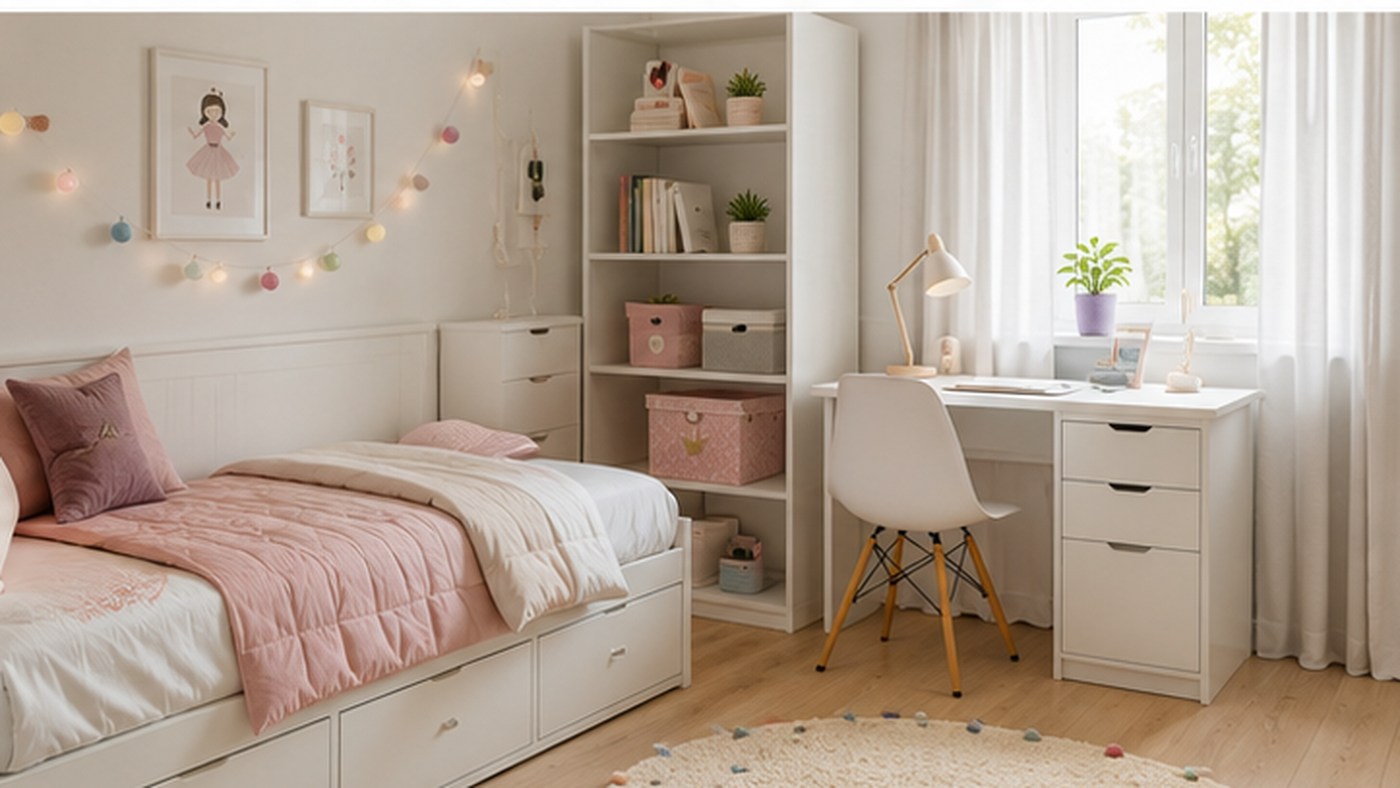
Furniture for current needs
A younger child may need accessible belongings and play space; a schoolchild needs a desk, chair and supplies. A teenager may want privacy, books or a place for a visitor. These are discussion prompts, not a fixed age timetable.
Choose the bed for needs, manufacturer restrictions and room layout. Mattress size is not overall bed size. A matching set does not automatically save space: check each item and whether all its functions are needed.
Small girls’ room: plan the layout first
Mark the bed and access, then the study desk with its chair, wardrobe doors and drawers. Avoid a separate furnishing for every idea: one suitable work area can serve several interests. A dressing table matters only if it is wanted and fits.
A raised bed is not automatically the best choice. Check permitted user age, ceiling height, access and fitting. Vertical storage must be accessible and secured as instructed. Total room area alone does not establish usable floor space.
Colours, light and belongings
Test a wall-colour sample beside the furniture. A neutral base makes accents easier to change, but stronger colours can work if she likes them. Decorations should not block task light or occupy the necessary work surface.
Provide separate places for creative supplies, school items and personal belongings. Combine open shelves with closed boxes. An easy-to-tidy room depends on the storage arrangement, not a single colour.
Checklist before buying
- Discuss favourite activities.
- Measure furniture and operating space.
- Check safety against the instructions.
- Keep themed details replaceable.
- Separate hobby and school supplies.
Frequently asked questions
Does a girl’s room have to be pink?
No. Choose for her preferences, existing furniture and room light.
How can the room adapt without replacing everything?
Choose functional furniture that fits and replaceable accents. Review needs as she grows.
Is a furniture set necessary in a small room?
No. Individually selected pieces may fit irregular spaces and specific needs better.